The Rad-X Filter - Electrical Protection for CT Scanner

Power protection for MRI designed for high-end medical imaging.

Overview

The Rad-X Filter (“RXF”) offers a more suitable solution for safeguarding your CT than conventional power conditioners and uninterruptible power supply (UPS) systems. Each RXF unit is custom configured specifically for the Make and Model of your CT and the final circuit that directly powers your CT.

Benefits

CLININCAL: The RXF improves the quality and reliability of patient care
by ensuring the underlying technology performs at its peak.
OPERATIONAL: The RXF acts as a proactive tool to streamline the management and uptime of high-value medical assets.
FINANCIAL: Revenue Protection: Every hour a CT is down represents lost revenue. Improved uptime directly leads to higher patient throughput and maximized billing opportunities.

Technical Features

The RXF is designed as an in-line, series, low-pass, bi-directional, pi-configuration power filtration system that utilizes reactors and capacitors, along with transient voltage surge suppression (TVSS). Its primary function is to attenuate High Frequency Electrical Noise (“HFEN”) and Low-Level Voltage Impulses (“LLVI”) through three main mechanisms:


  1. Every time A CT scan is performed, the RXF attenuates HFEN and LLVI generated by the CT itself (load-generated) from echoing back into the CT and degrading its CT tube and electronic components, causing them to eventually fail.
  2. It attenuates HFEN and LLVI generated by external sources (line-generated) and prevents this unwanted energy from infiltrating the CT electronic components, and causing intermittent disruption and premature component failures.
  3. It stops HFEN and LLVI generated by the CT every-time a CT scan is performed from adversely affecting neighboring imaging and therapy systems that share the common 480-volt electrical system.
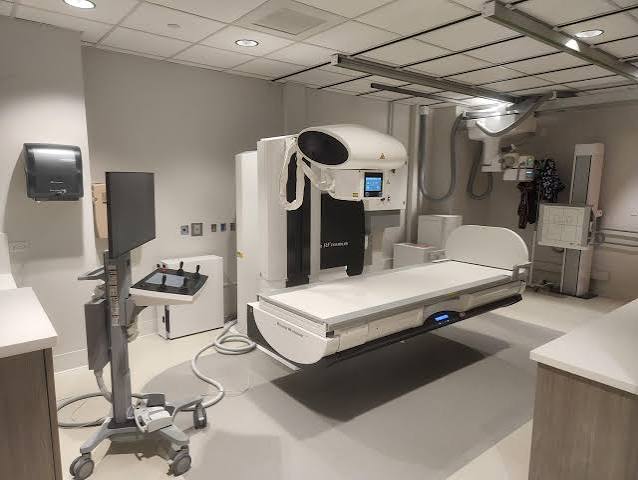
A modern CT scanner machine with a patient bed.
"Radiology room with advanced imaging technology"

CT Scanner Power Requirements and Site Readiness

In installing a computed tomography (CT) scanner, it’s important to account for the original equipment manufacturer (OEM) specifications, circuit configuration, grounding conditions, and overall power distribution to avoid equipment problems.

Before installation, key considerations include:

  • OEM specifications: Confirm the manufacturer’s electrical requirements and installation guidelines before selecting protective equipment.
  • Circuit configuration: Review the branch circuit and Delta/Wye configuration where relevant.
  • Grounding and bonding: Test grounding conditions and investigate potential sources of electrical noise.
  • Power distribution: Check nearby loads and shared circuits that could introduce electrical problems.

This preparation helps determine whether additional electrical protection for CT scanner systems or power protection for MRI is appropriate for your installation. The Rad-X Filter provides customized filtration solutions made for the specific medical equipment, helping facilities address power-quality issues.

When to Evaluate CT Scanner Power Quality

Power-quality assessments are valuable. During new installations and equipment replacements, an assessment can determine whether the existing electrical system meets the new equipment requirements. If repeated electrical and equipment problems recur, professional electrical monitoring may help assess and address the source, which can also help guide decisions about customized filtration.


The Rad-X Filter offers power protection for CT scanner equipment designed to address electrical noise from both incoming facility power and equipment-generated feedback. Contact us today to arrange a consultation and find out more.

Patient undergoing imaging procedure in clinic.

Additional Capabilities

In addition to attenuating HFEN and LLVI, the RXF effectively suppresses power spikes, transients, low-frequency impulses, and even transients caused by severe lightning and utility company equipment failures.

Installation and Warranty

The RXF is wall-mounted, preserving valuable floor space. It is backed by a five-year warranty, and there is no requirement for a service contract.

Ready to Protect Your CT Investment?

Contact us today to discuss a custom power filtration solution for your CT scanner.

Frequently Asked Questions

How is it different from a standard power conditioner or UPS?

Conventional power conditioners and uninterruptible power supply (UPS) systems are general-purpose. Each RXF unit is custom-configured for the make and model of your CT and for the final circuit that directly powers it, so it is a more suitable fit for protecting this equipment.

Can it protect against lightning and utility power problems?

Can it protect against lightning and utility power problems?

Can a CT scanner share an electrical circuit with other equipment?

It depends on the scanner manufacturer's requirements and applicable electrical codes. A professional survey may help assess the connected loads before approving a shared circuit.

What are the installation, warranty, and service requirements?

The RXF is wall-mounted, so it saves valuable floor space. It comes with a five-year warranty, and no service contract is required.

Does a voltage regulator eliminate all electrical noise?

No. Voltage regulation primarily addresses voltage variations within its design capabilities. High-frequency electrical noise may require a different or additional filtering approach.

How can facilities determine whether filtration is improving power quality?

Engineers can compare appropriate measurements taken before and after installation, using consistent monitoring methods and operating conditions. Service records and downtime trends can provide additional context, although changes alone do not prove that filtration caused an improvement.
Scroll To Top